When Black Clover premiered in 2017, the discourse was immediate and largely dismissive. Asta screams too much. The magic system is unoriginal. It's just Naruto with grimoires.
None of these criticisms were entirely wrong. All of them missed the point.
By the time the Black Clover anime concluded its 170-episode run in 2021 — and certainly by the time the 2023 theatrical film arrived — it had become one of the most satisfying long-form shonen experiences of the decade. The audience willing to stick through the early rough edges had been rewarded with something genuinely earned.
Here is why Black Clover deserves a complete reappraisal.
What Black Clover Is Actually About
The premise: in a world where magical ability is everything, Asta is born without any magic at all. His childhood friend Yuno is a prodigy. Both compete to become the Wizard King — the highest magical rank in the Clover Kingdom.
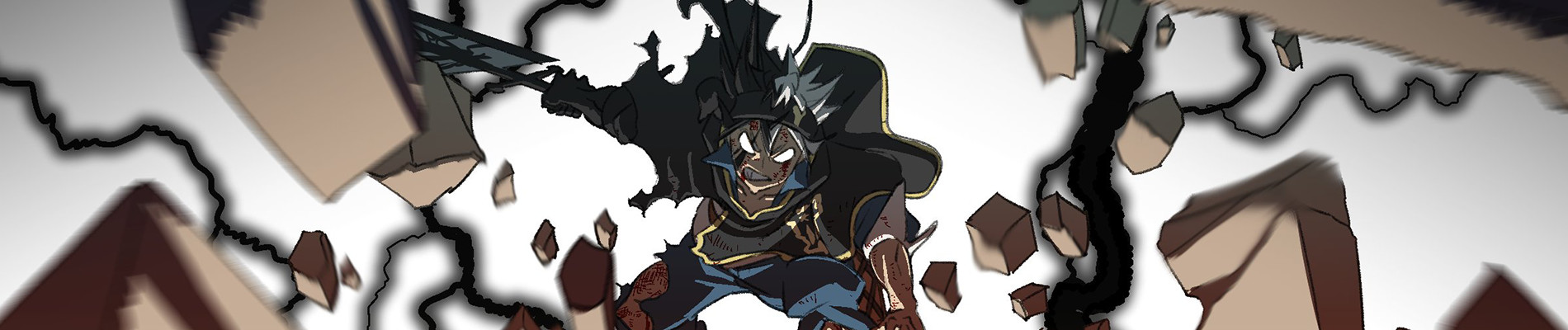
Yes, this is structurally similar to Naruto (talentless outcast + gifted rival + pursuit of the top position). The difference is in execution: where Naruto eventually grants its protagonist supernatural power as a narrative cheat, Black Clover commits to Asta's powerlessness as a permanent condition. He will never have magic. His anti-magic ability — which he wields through extreme physical training and five-leaf grimoire swords — is not magic. It is the absence of magic weaponised.
This distinction matters enormously for the series' themes. Black Clover is about working harder than everyone else in a system designed to exclude you. Asta never gets a power-up that negates his fundamental limitation. He gets stronger by training until he collapses, again and again, in a world that has never given him any reason to believe effort will be rewarded.
The Early Episodes Problem — and Why to Push Through
Episodes 1 through approximately 30 are hard. Asta's shouting is genuinely grating. The pacing is loose. The supporting cast is not yet established enough to carry scenes when Asta is absent.
This is the period when most viewers dropped the series. It is also the period before the series found its register.
The Black Bulls arc, beginning around episode 15, is where the ensemble starts to function. When the show shifts focus to the dysfunctional Magic Knight squad Asta joins — a group of social outcasts and misfits led by the inexplicably powerful Yami Sukehiro — the series begins to demonstrate what it's actually interested in: the relationship between raw ability and raw effort, and what happens when a community of people society has discarded decides to become the best anyway.
The Power Progression
No shonen series in the last decade has handled protagonist power growth with more structural discipline than Black Clover.
Asta's improvements are always earned through visible effort, usually depicted across multiple episodes of dedicated training. Each new anti-magic technique has a logical relationship to the previous ones. The limits of his power remain consistent — anti-magic cancels other magic but Asta himself is a human teenager who can be exhausted and hurt.
This creates stakes that many more celebrated shonen series fail to maintain. When Asta fights someone significantly more powerful, you feel the gap. His victories are not given by plot convenience; they are extracted through preparation and stubbornness.
Yami Sukehiro and the Supporting Cast
The Black Clover ensemble is the series' greatest achievement. Where Naruto's supporting cast often exists to reflect the protagonist's journey, Black Clover's Magic Knights feel like they have lives and arcs independent of Asta.
Yami — the Black Bulls captain — is one of the great shonen mentor figures. His "surpass your limits" philosophy is simple to articulate and the series demonstrates repeatedly that it is also hard to live, showing Yami straining against his own limitations as the threats escalate.
Noelle's arc from noble-born girl ashamed of her unstable magic to a warrior of genuine power is executed across the full run of the series and is more emotionally satisfying than most of the main character arcs in comparable shonen.
The Spade Kingdom Arc and Its Revelations
The final arc, which runs through the anime's conclusion and into the film, delivered the production quality the series had always been capable of. Studio Pierrot, which had been delivering adequate-to-good animation throughout the run, produced fight sequences in the Spade Kingdom arc that competed with any contemporary shonen adaptation.
The Asta vs Dante fight in particular — sustained across multiple episodes with escalating visual ambition — stands as the best animation in the series' run and one of the better shonen battles of its year.
The Film: Sword of the Wizard King
The 2023 Netflix film serves as a bridge to the confirmed sequel series and functions as a statement of intent: this is what Black Clover looks like when given theatrical-quality resources and production time. If you watched the film before the series, go back and watch the series. If you dropped the series early, watch the film. Either path leads back to the same conclusion.
Give It the Chance It Earned
Black Clover is not Fullmetal Alchemist: Brotherhood. It is not the most ambitious shonen ever made. What it is: a deeply sincere story about refusing to accept the limits a system has assigned you, executed with improving craft across 170 episodes and emerging, by the end, as something worth the investment.
The discourse missed it because the first 30 episodes were rough. The series didn't let that stop it.
Neither should you.