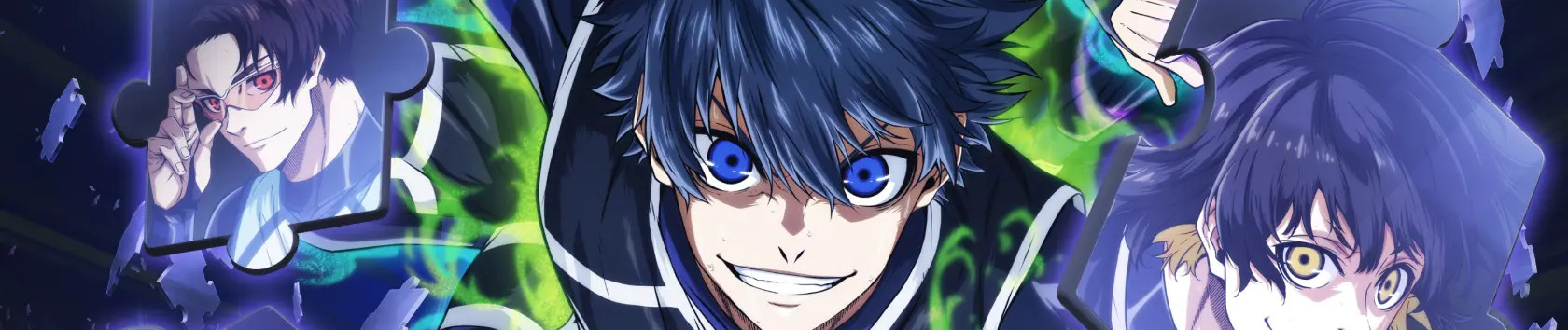
When Blue Lock started, the premise sounded like a gimmick: a government program to create the world's most selfish striker by training 300 elite high schoolers to eliminate each other.
Three years and 270 chapters later, that gimmick has become one of the most sophisticated explorations of athletic genius and ego in sports manga history. And the World Cup arc is where it all comes together.
The World Cup Arc Changes Everything
For most of its run, Blue Lock was contained — elite Japanese teens competing against each other in controlled environments. The logic was internal, the rules were artificial, and the stakes (though felt) were ultimately fictional.
The World Cup arc blows all of that open. Isagi and the other Blue Lock graduates are competing against the actual best players in the world, on a stage where failure isn't elimination from a program — it's irrelevance on the global stage.
The power shift is enormous. Players who dominated their peers are suddenly facing adults who have refined their "weapons" over decades. Blue Lock's philosophy — the idea that extreme self-expression creates a better player than team-first thinking — gets its hardest test.
Isagi's Development Reaches New Heights
Yusuke Nomura has been building Isagi's unique ability — "spatial awareness as weapon" — for 270 chapters. The World Cup arc is the payoff.
What makes Isagi compelling isn't raw talent (he doesn't have the most of any Blue Lock player) but his ability to process the field as a dynamic system and find the gaps no one else sees. Watching this ability get pushed to its limits against opponents with completely different but equally valid philosophies of football is consistently thrilling.
The match in chapters 240-255 — which we won't spoil specifically — might be the best extended sequence the manga has produced.
The Art Is Doing Heavy Lifting
Yusuke Nomura's page composition has evolved significantly from the early volumes. Action sequences that once relied on speed lines and dramatic expression now use layered panels and extreme perspective shifts that make the movement genuinely legible.
The character design work for the international players — each with distinct physical builds, movement styles, and panel "energy" — is impressive given how quickly they're introduced.
The Theme: What Does It Mean to Win?
Blue Lock has always been interested in a philosophical question most sports manga avoid: is it better to be brilliant alone or competent together?
The World Cup arc doesn't answer this cleanly (which is the right choice), but it complicates the question in interesting ways. Several characters who fully embraced Ego's philosophy are beginning to discover its limits. Others are vindicated.
The manga is smarter about this than it has any right to be.
Where to Start If You're New
Start from Volume 1. The slow build through the earlier arcs makes the World Cup material hit much harder. You need to understand what these players have sacrificed to appreciate why what they're doing now matters.
Manga Rating: 9.0/10 (World Cup arc specifically)
Read Blue Lock on the Kodansha app or Crunchyroll Manga.
Keep Reading: Blue Lock — The Sports Anime That Changed Everything · Haikyuu!! — Why It's Still the Greatest Sports Anime Ever · JJK Manga Ending Review