
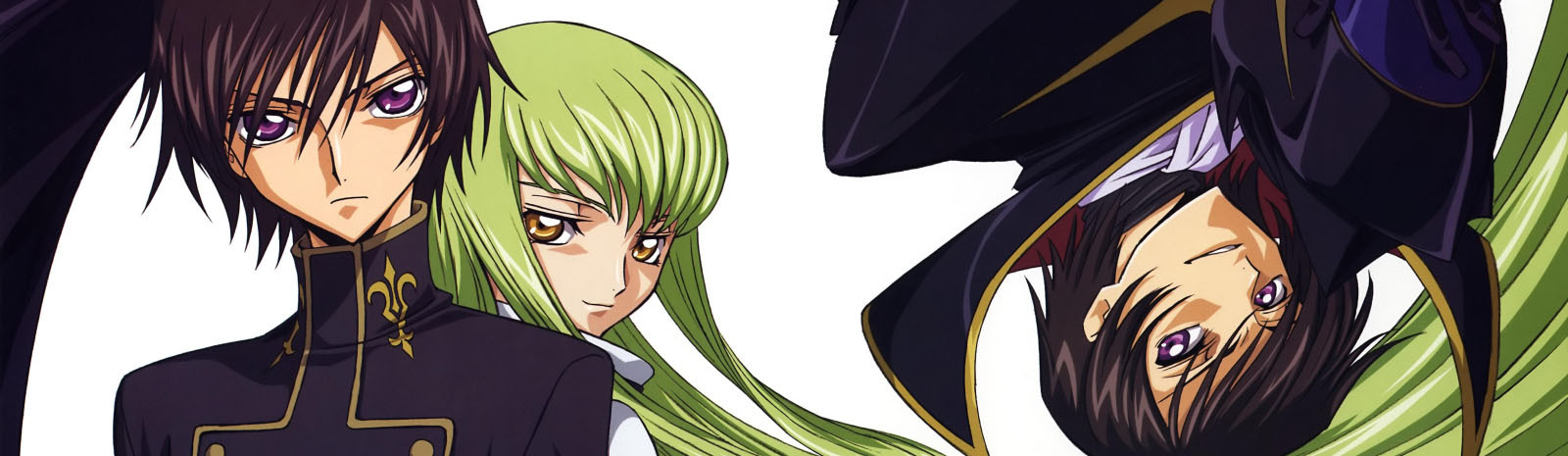
The finale of Code Geass: Lelouch of the Rebellion R2 is the most discussed anime ending of all time. Not the most controversial — it is too structurally deliberate, too clearly intentional to generate the kind of unsatisfied debate that controversial endings produce. It is discussed because it is the most satisfying conclusion any anime has delivered, and because nearly twenty years after it aired, nothing has matched it.
This is a review of the whole series, not just its ending. But the ending is why you watch.
The Setup: Lelouch vi Britannia
Lelouch Lamperouge is a disgraced prince of the Holy Britannian Empire, living in hiding in Area 11 — formerly Japan, conquered and renamed by Britannia. He is brilliant, arrogant, genuinely motivated by love for his disabled sister Nunnally, and equipped with a supernatural power (the Geass) that allows him to compel absolute obedience from anyone he makes eye contact with.
He uses this power to build a resistance movement — as the masked revolutionary Zero — while simultaneously attending school as an ordinary student. His best friend Suzaku Kururugi believes in reforming Britannia from within. Both are wrong. Both are right. Both are complicit in things they cannot take back.
This is the structural engine: two people who love each other, pursuing the same goal through incompatible methods, each accumulating costs that eventually become impossible to continue ignoring.
The Mecha
The Knightmare Frame mecha designs are among the best in the genre — sleek, asymmetrical, with a visual logic that distinguishes models by national affiliation and function. Sunrise's mechanical animation is exceptional, particularly in the extended combat sequences of season two.
But Code Geass uses its mecha differently than most mecha series. They are tools of political leverage rather than the primary dramatic subject. The combat sequences are exciting and visually inventive, but they are always in service of the political and character drama rather than ends in themselves.
This is the right choice. The series' genius is in its strategic dimension — Lelouch's military planning, the chess-like quality of his campaign, the way each victory creates new costs — and the mecha serve that genius rather than competing with it.
The Political Architecture
Sunrise built a world political system for Code Geass that holds up to scrutiny. Britannia's conquest philosophy — that the strong have the right to take from the weak and the conquered have the obligation to resist — has internal logic. The Holy Federation's counterarguments have their own contradictions. The various occupied nations' responses to domination are differentiated rather than uniform.
This care pays off in the moral complexity of Lelouch's campaign. He is fighting for liberation, and his methods require him to cause the deaths of people he is ostensibly fighting for. The series does not let him off the hook for this. Neither does it present pacifism as a straightforwardly viable alternative — Suzaku's path costs different things, not fewer things.
The Characters
The supporting cast of Code Geass is the series' most underrated achievement. Twenty-plus characters with distinct allegiances, moral frameworks, and personal histories that remain consistent and comprehensible across 50 episodes.
C.C., the immortal girl who grants Lelouch his Geass, is the most interesting character in the series — present at the beginning and end of everything, understanding what Lelouch is doing more completely than he does himself, and refusing to let him simplify what he is building toward. Her scenes with Lelouch are the series at its most emotionally honest.
Kallen Stadtfeld — pilot, half-Japanese, Black Knights member, person who believes in Zero and then has to confront what Lelouch is actually doing — is the series' most sympathetic character and its best action lead.
The Ending
Lelouch's final plan — the Zero Requiem — is the series' thesis statement as plot event. Without detailing it for those who haven't seen it: it requires him to become the thing he was fighting against in order to give someone he trusts the opportunity to end it. The logic is exact. The emotional cost is total. The execution is immaculate.
The visual grammar of the final sequence — the tracking shot, the colors, the music, the final image — is the most deliberate filmmaking Sunrise ever achieved in a television production.
I have seen the ending of Code Geass perhaps fifteen times across years of rewatching. It is effective every time. That is not common.
2019 Re-edit Films + Resurrection
The theatrical re-edit of seasons one and two (Code Geass: Lelouch of the Re;surrection) modifies some plot points and serves as a bridge to the 2019 sequel film. The sequel is entertaining and well-animated, but it is not essential — the original series' conclusion is complete in itself, and the sequel cannot improve on it.
Watch the original series. Watch R2. Watch the ending. Then decide if you want more.
Verdict
Code Geass is the most narratively precise anime ever made by Sunrise. It builds a political world, populates it with believable characters, deploys its power system with structural discipline, and earns its conclusion through fifty episodes of decisions that accrue meaning across the full run.
The ending is not earned by the ending. It is earned by everything that comes before it.
Score: 10/10