There is a moment near the end of Haikyuu!!'s final theatrical arc where a character who has spent years as a supporting presence — a rival, then a shadow, then something harder to name — sits alone after the final match and processes what it means to have given everything you had to something and reached the limit of what you can achieve.
The scene runs about four minutes. There is no dialogue. The character does not cry dramatically; they sit, and think, and eventually stand up and leave. The camera holds through all of it.
This is what Haikyuu!! does that no other sports anime does as consistently or as well: it treats loss as real. Not as a narrative obstacle on the way to eventual triumph, but as an event with genuine consequences for the people who experience it.
What Haikyuu!! Is About
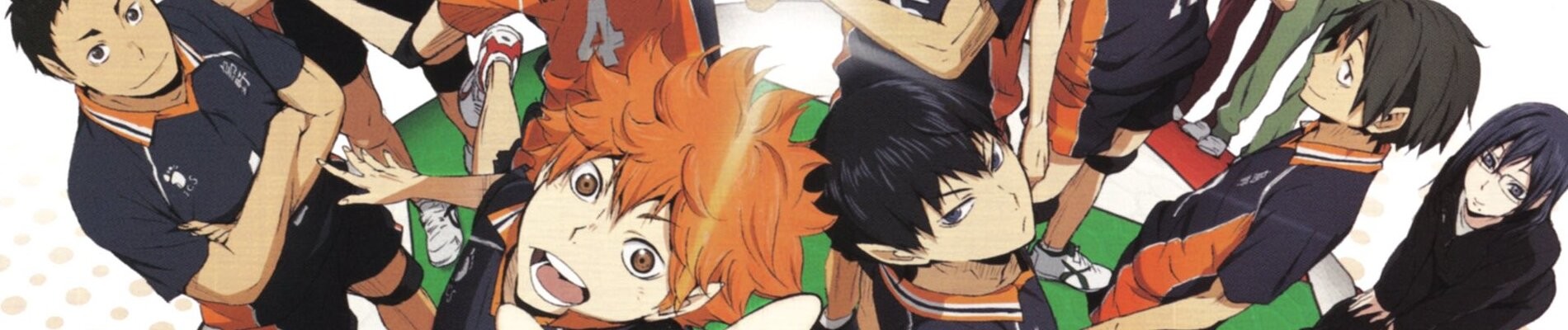
On the surface: high school volleyball. Shoyo Hinata, a small boy obsessed with a legendary small player called "The Little Giant," joins Karasuno High School's volleyball team alongside Tobio Kageyama, a setter whose perfectionism and icy demeanor have already destroyed one team. They hate each other. They become partners. They pursue the national championship.
Underneath: what it means to care about something enough to fail at it repeatedly. Haikyuu!! is interested in volleyball as a vehicle for examining how people handle the knowledge that they have limitations — that there will always be someone better, that effort does not guarantee victory, that the people you lose to are also working as hard as you are.
The Rivals as Characters
Haikyuu!!'s structural genius is in how it handles rival teams. Each opponent is given the same attention as Karasuno — their histories, their internal dynamics, their reasons for caring — so that every match is between two groups of people we understand, not between protagonists and antagonists.
Aoba Johsai: the team anchored by Oikawa Tohru, a player of extraordinary skill and psychological acuity who is not a prodigy but has made himself exceptional through obsessive refinement. His rivalry with Kageyama is the series' most complex relationship — mentor-turned-rival-turned-mirror-image.
Nekoma: the team built on connection and recovery rather than power, led by Kuroo Tetsurou, whose intellectual approach to volleyball is the counterpart to Hinata's intuitive athleticism. The Karasuno-Nekoma rivalry spans the full series and is resolved in the theatrical finale.
Shiratorizawa: the nationally dominant team anchored by Ushijima Wakatoshi, a player of such physical superiority that defeat seems mathematically inevitable. The Karasuno-Shiratorizawa match is the best single sequence of volleyball animation in the genre.
The Production
Production I.G.'s work on Haikyuu!! is their greatest television achievement. The volleyball sequences — the spatial logic of receiving, setting, and spiking rendered with physical accuracy and emotional heightening simultaneously — represent sports animation at its technical peak.
The signature quality is impact. When a spike connects, when a receive forces a player off balance, when Hinata's small frame absorbs the force of a blocked return — these moments have weight. The animation does not simply depict volleyball; it communicates why volleyball matters to the people playing it.
The sound design amplifies this. The sound of a volleyball being set, of sneakers on a gymnasium floor, of the score board changing — these are rendered with the kind of attention to texture that transforms competent production into memorable one.
Season 4 and the Inarizaki Match
Season 4 (Haikyuu!! To the Top) is the series at its most confident. The Inarizaki High match — against a team built on disruption and momentum management — is the most tactically sophisticated in the series. Kageyama's development across the season represents his character arc at its most complete.
The animation quality of season 4 is divisive among fans — a shift in style was introduced that some viewers found jarring. This reviewer found it a successful evolution, emphasising kinetic energy over realistic mechanics in a way that serves the increasingly superhuman quality of the volleyball being played.
The Films: Haikyuu!! The Dumpster Battle + The Winner and the Loser
The two theatrical films concluding the series (adapted from the manga's final arc) are the best Haikyuu!! has ever looked. The Nekoma match — built across the entire series' run as the ultimate contest of two compatible philosophies — delivers on every promise made across four seasons. The Hinata-Kageyama dynamic reaches its final form.
The post-match epilogue sequences, showing where the characters end up, are the most satisfying conclusion any sports anime has achieved.
Why It Remains the Standard
Haikyuu!! has been the gold standard for sports anime for a decade because it consistently does the hardest thing: it makes you care about the outcome of a volleyball match between fictional high schoolers to a degree that is objectively disproportionate and subjectively felt as completely appropriate.
Blue Lock has recently mounted a serious challenge to Haikyuu!!'s position as the best sports anime — it is more conceptually original and more psychologically specific. But Haikyuu!! has something Blue Lock does not yet: a complete arc, a finished story, a record of how its emotional promises were redeemed across four seasons and two films.
The final score: Haikyuu!! remains the greatest sports anime ever made. Visit the films after completing the series. Clear your evening.
Score: 10/10