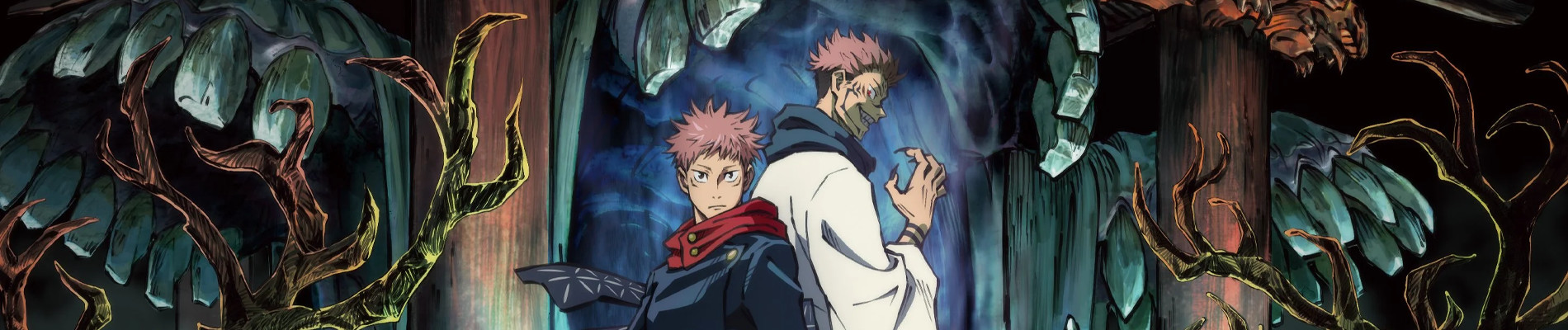

Jujutsu Kaisen is done. After 271 chapters and more beloved character deaths than any series since Berserk, Gege Akutami has closed the book on the most divisive shonen manga of the 2020s.
So: did it stick the landing?
The honest answer is: partly.
What JJK Did Extraordinarily Well
From the first chapter to the last, Jujutsu Kaisen understood that consequences are what make stakes meaningful. Every death hurt because Akutami refused to undo them. Every power-up came at real cost. The manga never let its characters be safe.
The final arc — the Shinjuku Showdown — delivers some of the most technically impressive fight choreography in shonen manga history. Chapter after chapter of Akutami pushing sorcery mechanics to their absolute limits, each confrontation more creative than the last.
Gojo's return and everything surrounding it is handled with exactly the emotional weight it deserves.
The Character Resolutions Are Uneven
This is where JJK divides its fanbase.
Some characters — Yuji, Megumi, Nobara — get resolutions that feel earned and consistent with who they've been throughout the series. Others feel rushed, particularly in the final 15 chapters, as if Akutami ran out of space or energy to give them their due.
Megumi's arc in particular is frustrating. After being set up as co-protagonist for 250 chapters, his resolution feels like it happens off-panel. Fans who followed him closely will likely feel short-changed.
The Theme Lands
What JJK was always about — the burden of living in a broken system, the futility of cursed energy as metaphor for inherited trauma — is articulated clearly in the final chapters.
Yuji's character arc concludes in a way that feels thematically perfect even if some of the execution is rushed. He doesn't get a triumphant power fantasy ending. He gets something more honest and sadder.
For a series that killed its most popular character without blinking, a conventionally satisfying ending would have been the wrong choice. Akutami knew that.
The Sukuna Problem
Any honest review of the JJK ending has to address Sukuna — the series' central villain — and whether his conclusion satisfies.
The short answer is yes, more than most fans expected. Sukuna's final arc is the most coherent extended villain portrayal Akutami produced. His motivations, which were deliberately obscured for most of the series, crystallize in the Shinjuku arc in a way that recontextualizes his earlier appearances without retconning them.
The problem is not Sukuna's conclusion. The problem is what getting there costs — specifically, what it costs Megumi, whose body Sukuna occupies for the final arc. Megumi's agency is stripped from him at exactly the moment the story most needs him to be an active participant. His fans are justified in their frustration. The narrative needed him and then, by design, could not use him.
Whether this is a meaningful artistic choice about sacrifice and helplessness, or simply a structural problem that Akutami couldn't solve cleanly, is a debate that will continue for years.
How the JJK Anime Will Handle This
The anime has not yet adapted the final arc, which gives the adaptation team both a challenge and an opportunity.
A challenge because the manga's pacing in the Shinjuku Showdown is relentlessly fast — chapters that cover enormous amounts of plot in very few pages. The anime will need to expand these sequences significantly to make them land emotionally.
An opportunity because MAPPA knows exactly what landed and what didn't. They've seen the fan discourse. They have the manga as a blueprint, but they also have the freedom to linger on the character moments that feel rushed in the source material.
The JJK anime has consistently improved on the manga's pacing. There's real reason to hope the final arc adaptation will be the definitive version of the story.
Final Verdict
Jujutsu Kaisen's manga ending is flawed and divisive, but it earns the right to be those things. It's the conclusion of a series that never cared about being comfortable, written by a mangaka who made their creative vision more important than fan satisfaction.
The Shinjuku Showdown, taken as a whole, is extraordinary. The final 15 chapters are rushed. The themes land. Several character resolutions don't. That's the honest summary.
For a series that set out to subvert shonen expectations at every turn, an ending that partially succeeds and partially frustrates is, perhaps, the most fitting conclusion possible.
That's rare. Even when it frustrates you, it's worth respecting.
Manga Rating: 8.4/10 (ending arc specifically — full series is a 9.2)
Read the complete Jujutsu Kaisen on the Shonen Jump app or Viz Media.
Keep Reading: JJK Season 3 Culling Game — Full Recap · JJK Season 2: The Shibuya Incident Breakdown · Chainsaw Man Part 2 Manga Review