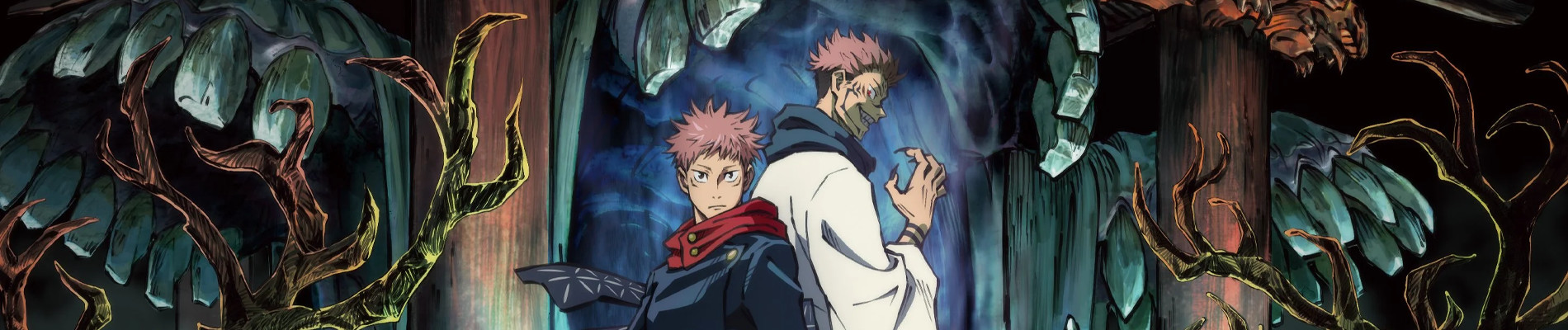
In the summer of 2023, Jujutsu Kaisen season two set a new benchmark for action animation in television anime. By the time the Shibuya Incident arc concluded in December of that year, it had also set a new benchmark for consequence — killing or incapacitating more major characters in a single arc than most series manage in their entire run.
Whether the writing matched the animation remains a legitimate question. We will get to that. First, the production.
What MAPPA Did
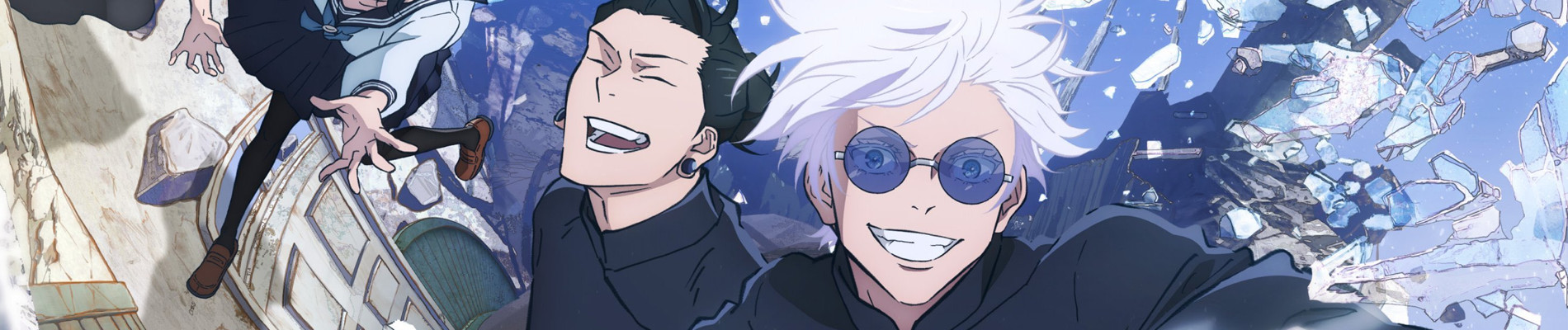
The scale of MAPPA's production commitment to JJK season two is difficult to overstate. The Hidden Inventory arc — a prequel focusing on the young Gojo and Geto — deployed a visual style distinct from the main series, warmer and more classically rendered, that communicated its retrospective nature without being heavy-handed.
Then came Shibuya.
The Shibuya Incident arc spans roughly sixteen episodes and contains approximately thirty distinct combat sequences of varying length and complexity. The average quality across these sequences is extraordinary by any standard. At their peaks — the Gojo versus curse users sequences, the Nanami versus transfigured humans sequences, the Toji versus Dagon fight — they represent some of the finest action animation produced for any medium.
The Gojo Domain Expansion sequence received a specific shout-out in the anime community and from industry professionals as technically unprecedented. The use of negative space, the geometric precision of the domain architecture, the way the sequence treats the infinity concept as a visual language rather than just a power mechanic — it is a production achievement without precedent in weekly television anime.
MAPPA reportedly strained their production pipeline severely to deliver this season. The cost to their staff has been discussed publicly and critically. Whatever your position on that question, the output is what it is: extraordinary.
Hidden Inventory: The Prequel That Recontextualises Everything
The first arc of season two follows the teenage Gojo Satoru and Geto Suguru on an escort mission — protecting Riko Amanai, a vessel destined to merge with the Tengen immortal, from the Star Religious Group and other interested parties.
The arc works on two levels. As a standalone action story, it is efficient and satisfying. As a character study of the Gojo-Geto friendship — the story of how the two most powerful jujutsu sorcerers of their generation arrived at opposite sides of the series' central conflict — it is essential viewing.
Geto's radicalization makes sense in the arc's terms. The specific moment of disillusionment — witnessing how the sorcerer establishment treats the people it is theoretically protecting — is rendered as a genuine moral rupture rather than a villain-origin convenience. By the end of the arc, you understand his choice even while recognising where it leads.
This understanding makes his final scene in the main series timeline — which occurs during Shibuya — devastatingly effective.
The Shibuya Incident Arc: Deaths and Consequences
A complete breakdown requires spoiler territory. If you haven't watched: stop here, watch the season, return.
Haibara Yu — First death of the arc, primarily significant as Nanami's defining wound. His death before the series' main timeline is established in dialogue; the aftermath shapes Nanami's entire character.
Kokichi Muta (Mechamaru) — A negotiated death. His deal with Mahito secured protection for his loved ones in exchange for information. The sequence with Miwa in the epilogue is the arc's most quietly devastating moment.
Kento Nanami — The most significant death in terms of fan response and narrative function. Nanami's death is staged as a deliberate subversion of the standard "veteran sorcerer" last stand — he does not die fighting, he does not die defending someone, he is killed by Mahito while already critically wounded in what functions as an execution. The refusal to give him a heroic death is the point. The world does not arrange itself around narrative satisfaction.
Nobara Kugisaki — Technical status: ambiguous. Visually, definitively dead. The manner of her death — Mahito touching her face, activating Idle Transfiguration — removes her from the series at the moment she had become its most interesting character. The ambiguity of her survival status has never been satisfyingly resolved in the manga.
Gojo Satoru — Sealed, not killed. The Prison Realm sealing is the arc's structural climax and the event the entire season builds toward. Gojo's removal from play is the series' most significant single narrative event because the premise of JJK's power structure — that Gojo's existence keeps everyone else safe — is proven correct by his absence. Everything falls apart immediately.
The Writing Question
Here is the honest assessment: Jujutsu Kaisen's writing does not match its animation.
The world-building is inconsistent. Power mechanics are introduced and abandoned based on plot necessity. Character decisions sometimes reflect authorial convenience rather than established psychology. The emotional payoffs are real, but they occasionally arrive before the setup work has been done.
None of this prevents the series from being tremendously effective at what it does. The deaths land because the characters were built well enough. The fights work because the rules, however flexible, are invoked consistently within individual sequences. The overall arc of Geto's radicalization and the consequences of the sorcerer establishment's failures is the kind of structural critique that elevates genre fiction.
But compared to the writing sophistication of a Frieren or a Delicious in Dungeon, JJK is operating at a different level of literary ambition. It knows what it wants to do — escalate, kill, force grief — and it does it with extraordinary technical execution and considerable emotional intelligence. Whether that is enough depends on what you ask from the medium.
What Season 3 Needs to Do
The Culling Game arc, which season three is adapting, is widely considered the manga's most structurally sprawling section — a large cast, numerous moving pieces, and power mechanic introductions that test the series' consistency. The adaptation challenge is significant.
What JJK needs from season three: tighter writing, continued production excellence, and the courage to resolve the Nobara question rather than leaving it suspended indefinitely.
What it will almost certainly deliver: animation that makes the industry stop and stare.
That has been enough so far. Whether it remains enough is season three's central question.
Score: 9/10 (for the season as a whole, weighted heavily toward production value and Shibuya's emotional impact)