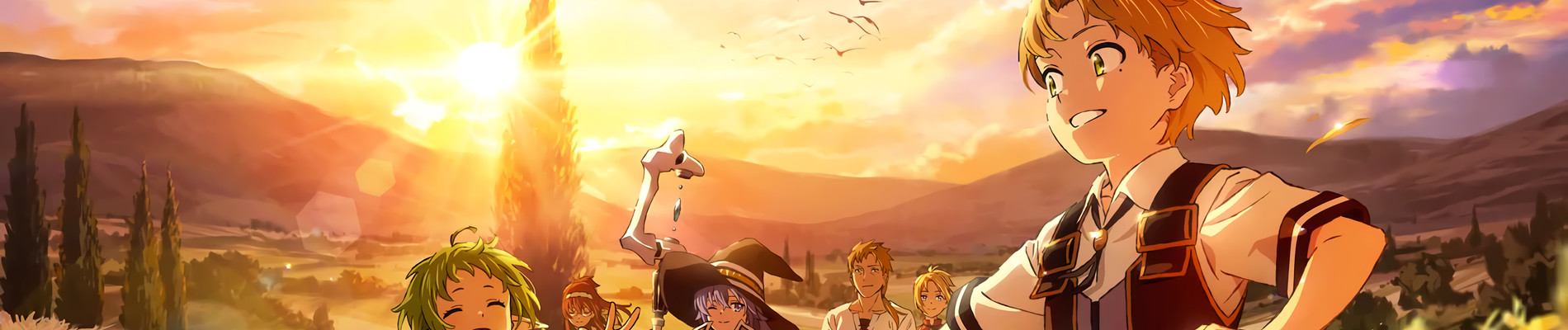
Mushoku Tensei occupies a strange position in anime discourse. It is simultaneously one of the most praised and most controversial isekai series in the medium's history — praised for its world-building and protagonist complexity, controversial for content decisions that many viewers find difficult.
This review will address both dimensions honestly. Season two is the series at its most mature and most accomplished, and it deserves engagement on its own terms.
What Mushoku Tensei Is
Rudeus Greyrat is a 34-year-old NEET reincarnated into a fantasy world with his memories intact. Unlike most isekai protagonists, Rudeus does not arrive as a power fantasy — he arrives as a deeply damaged person given a second chance, acutely aware of how he wasted his first life and terrified of repeating the pattern.
The series is genuinely about this: can a person who made serious mistakes, who hurt people through cowardice and selfishness, actually change? Not can they become powerful (Rudeus is very powerful) but can they become good — capable of connection, of honesty, of accepting love without sabotaging it?
This is a more interesting question than most isekai think to ask.
Season 2: The Central Reckoning
Season two focuses on Rudeus at a low point — isolated from his family, struggling with a psychological condition that prevents him from using magic (the series frames this as an anxiety disorder analogue), and confronting the accumulated consequences of decisions made across his two lives.
The arc that consumes most of the season is essentially a therapy narrative. Rudeus must identify why he freezes, trace it to specific events in his past (shown in flashback, including from his previous life), and work — actively, unglamorously — to address it. He cannot fight his way through this. Magic power is irrelevant to the problem.
Studio Bind's handling of this arc is exceptional. The psychological breakdown sequences are animated with a destabilizing visual quality — character designs softening, backgrounds losing detail — that communicates subjective mental states with genuine craft. This is not conventionally flashy animation but it is thoughtful, purposeful work.
Sylphie
The relationship between Rudeus and Sylphie — his childhood friend, now his wife — is the emotional core of season two. Their reunion, the negotiation of everything unsaid between them, and the work of building genuine intimacy after years of separation represents the best romantic writing the isekai genre has produced.
What makes it work is that Sylphie is not waiting to be found. She has a life, anxieties of her own, and specific things she needs from Rudeus that she has to learn to articulate. The series is interested in how two damaged people make something real together, not in the fantasy of effortless romantic resolution.
The Production
Studio Bind was founded specifically to produce Mushoku Tensei, and the series remains their sole major production. The result is unusual: all available resources concentrated on one project, with improving quality across the two seasons as the studio developed institutional competence.
Season two's animation surpasses season one's. The magical combat sequences — particularly the scenes involving Rudeus's father Paul — are the best in the series' run. The world environments, consistently strong throughout, achieve a lived-in texture that few isekai productions match.
The Controversial Elements
This review would be incomplete without acknowledging what makes the series difficult for many viewers. The early episodes contain fan service involving minors, and the protagonist's history (explicitly shown as part of his pre-reincarnation backstory) includes serious personal failures.
The series presents these elements within a framework of explicit moral consequence — Rudeus's past is not celebrated but interrogated — but this framing will not satisfy everyone, and it is not unreasonable to find the early content disqualifying. That is a legitimate response.
Season two largely moves past these elements, focusing instead on adult relationships and the psychological recovery arc. If you could not finish season one, season two is unlikely to change that. If you made it through and found the series' character work engaging, season two is the payoff that work was building toward.
Verdict
Mushoku Tensei season two is the best-written isekai anime ever produced. That is not a claim I make lightly in a genre that includes Re:Zero and Frieren (if we count that as isekai-adjacent). The psychological depth, the relationship writing, and the refusal to let Rudeus be redeemed simply by becoming powerful distinguish it from almost everything the genre has attempted.
It is also genuinely difficult material. Approach it with that understanding.
Score: 9/10