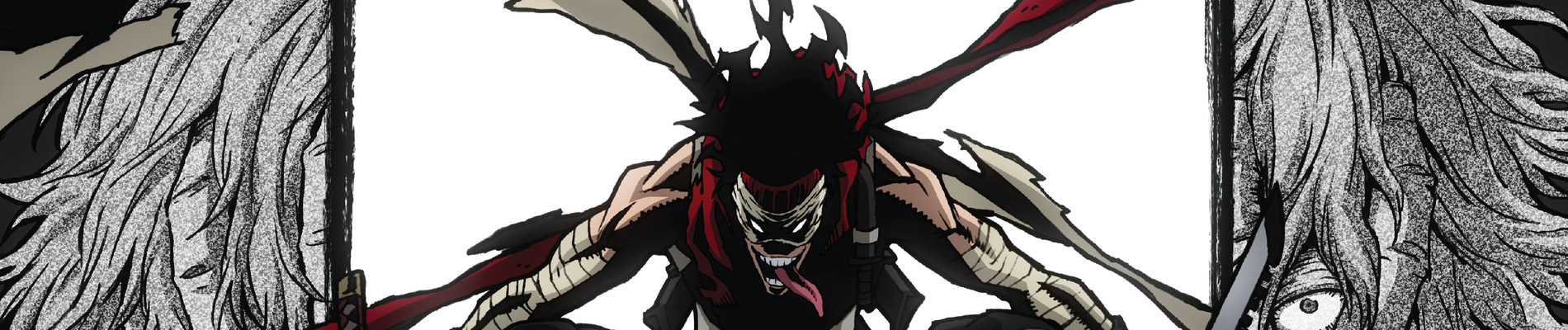
Kohei Horikoshi's My Hero Academia completed its manga run, and Studio Bones is adapting the final arc in what will be the definitive conclusion to a story that has defined a generation of anime viewers. For those who have followed Deku from his quirkless beginning to wherever this journey ends, this is the moment the whole thing has been building toward.
This review covers the manga's final arc with the understanding that anime viewers may wish to wait — spoiler warnings will be issued where appropriate.
A Decade of Deku
My Hero Academia premiered in 2016 and immediately established itself as the inheritor of the classic shonen crown — the series that would carry forward the tradition of Naruto and Dragon Ball for a new generation. The timing was perfect. Naruto had concluded, Bleach had lost momentum, and the market for a clean, accessible shonen with a loveable protagonist and a clearly defined hero mythology was wide open.
Horikoshi delivered exactly that, and then more. The series' early arcs — the UA Sports Festival, Stain the Hero Killer, the Raid on the League of Villains — demonstrated a creator who understood the shonen formula deeply enough to execute its best elements with uncommon confidence.
What distinguished MHA in its prime was the coherent thematic argument running beneath the surface action: what does it mean to be a hero in a society that has commodified heroism? What do we owe each other when the systems designed to protect us are compromised? How does admiration become aspiration become responsibility?
The Final Arc's Ambitions (Spoiler-Light)
The final arc — the war against All For One and his assembled villains — is Horikoshi's attempt to bring every thread of the preceding 35+ volumes to a conclusive resolution simultaneously. The ambition is extraordinary. The execution is, inevitably, mixed.
What Horikoshi gets right is the emotional payoff for the central character relationships. Deku and Bakugo's dynamic, the single most carefully developed character relationship in the series, receives an ending that honours everything that came before it without over-explaining or sentimentalising. The resolution of their rivalry — which was always really a story about self-worth and the internalization of other people's limitations — is handled with genuine restraint.
Todoroki's family arc, the series' most consistently excellent character subplot, concludes with appropriate weight. The ice and fire symbolism that Horikoshi has been building across the entire series pays off.
All Might's final role in the story is among the most moving sequences in the manga's entire run.
Where It Stumbles
The sheer volume of characters the final arc attempts to service creates significant structural problems. Secondary and tertiary heroes who have been developed enough that readers care about them get resolutions that feel compressed — important character moments crammed into pages that needed chapters.
The pacing of the All For One confrontation, in particular, suffers from the competing demands of action escalation and thematic conclusion. In trying to deliver both a satisfying power-scaling climax and meaningful thematic resolution simultaneously, Horikoshi occasionally achieves neither fully.
Several villain character arcs — particularly Shigaraki's — have divided the fandom sharply. The decision about how to handle the series' central antagonist will be read by some as the correct answer to questions the series had been asking for years, and by others as a betrayal of the darker direction later arcs seemed to be heading.
What Bones Will Do With the Anime
Studio Bones has been extraordinary stewards of the MHA story throughout its run. Their ability to amplify emotional moments through animation and sound design — the Detroit Smash, the Full Cowl, every Bakugo explosion — has made the anime version genuinely better than the manga in several key sequences.
The final arc gives Bones material that, if handled well, could produce anime sequences that stand alongside the series' greatest moments. The character design work Bones has done across ten years with these characters means that the final confrontations will carry the emotional weight of every previous interaction.
The choice of which episodes get elevated production budgets will be interesting to watch — Bones has historically concentrated their best animation on emotionally pivotal moments rather than simply the largest-scale action sequences, which is exactly the right instinct for MHA's conclusion.
Legacy
My Hero Academia will be remembered as the series that bridged the classic and modern eras of shonen anime — a work that understood its genre's history and built on it earnestly and skilfully. It introduced millions of viewers worldwide to anime as a medium, and it generated a level of sustained cultural engagement that only a handful of shonen series in history have achieved.
Its flaws are real. The final arc is the weakest sustained stretch in the manga's run. But the series' peaks — the Sports Festival, the Stain arc, the All Might vs All For One fight — are shonen anime at its very best.
Whatever its ending ultimately delivers, My Hero Academia has earned its place in the pantheon.
Score for the complete manga run: 8.6/10